
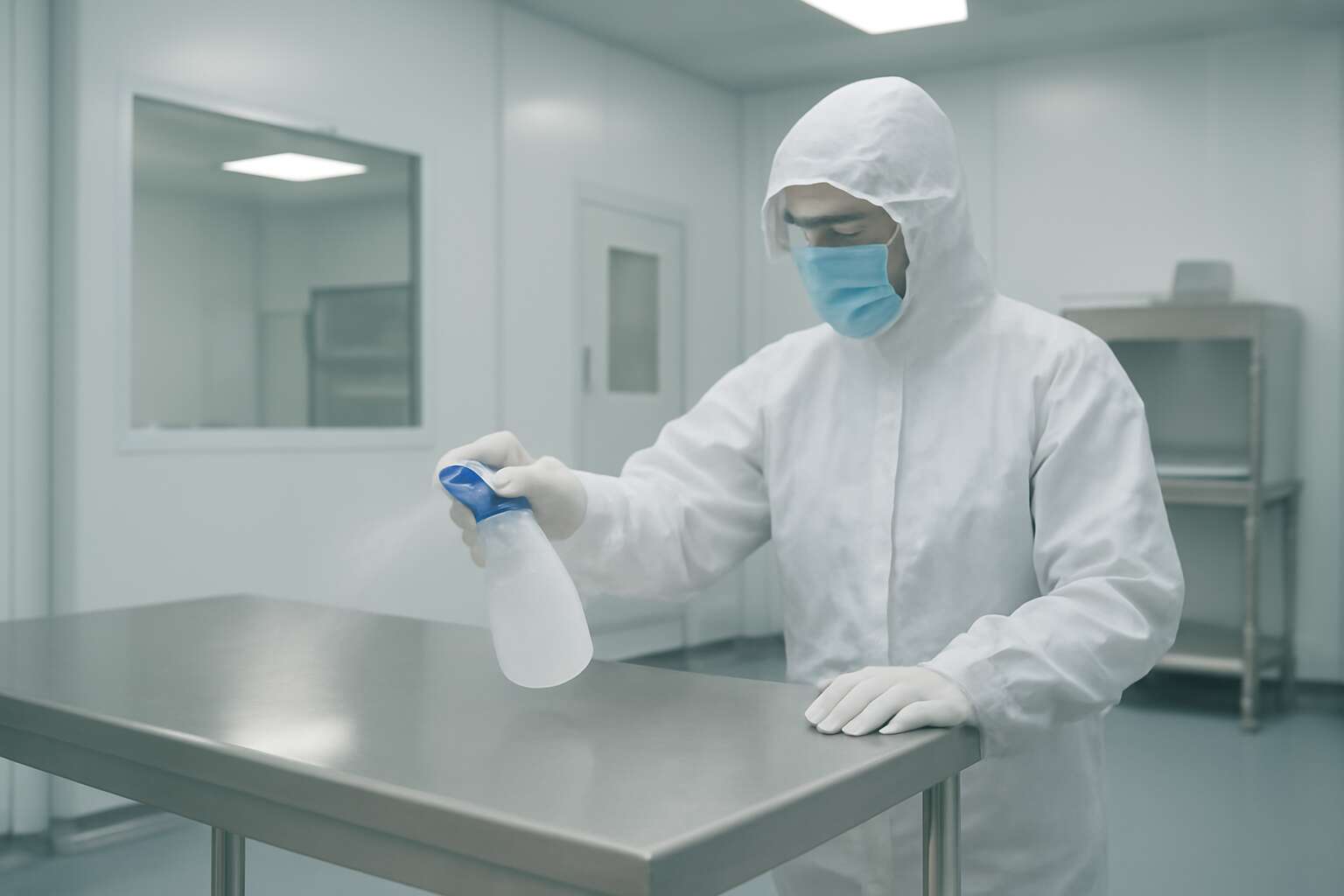
Overview of disinfectants in pharmaceutical manufacturing
Definition, scope, and roles of disinfectants in pharma facilities
Key regulatory expectations for disinfectants in manufacturing environments
In a cleanroom, the margin between quality and failure is measured in minutes, not miles. disinfectants used in pharmaceutical industry vary by facility type, surface, and risk level, but every program rests on a simple truth: consistent, validated sanitation is non-negotiable. An effective disinfectant strategy blends fast-acting chemistry with compatible materials and precise contact times, backed by data from routine environmental monitoring. The goal is to keep microbial risk below audit thresholds without compromising product integrity.
Key regulatory expectations include:
- Validated cleaning and disinfection cycles aligned with GMPs and local regulations
- Comprehensive documentation, change control, and batch traceability
- Ongoing environmental monitoring and periodic verification of residues against acceptance criteria
In South Africa, regulators like SAHPRA and PIC/S-aligned guidelines shape product approvals, supplier qualification, and disinfectant selection. Choose products with validated efficacy against your target organisms and compatible with your manufacturing equipment.
Impact of disinfection on product safety and quality
Disinfectants used in pharmaceutical industry are the quiet gatekeepers between sterility and failure. In South Africa, SAHPRA-aligned guidelines shape product approvals and how facilities qualify cleaners and validate performance, even down to the surfaces that touch a batch.
Their impact on product safety and quality is tangible: residues, material compatibility, and the microbial risk profile of the manufacturing line. A disciplined approach links chemistry to operation, turning a chaotic environment into a predictable, audit-ready system.
- Residue control and compatibility
- Target organism coverage and kill times
- Environmental monitoring integration
Ultimately, the choice of disinfectant strategy reflects more than chemistry: it is a moral commitment to patients, regulators, and staff. The right balance preserves trust and keeps the product at the center of every decision.
Differences between disinfectants and sanitizers in pharmaceutical settings
A quiet gatekeeper stands between sterility and failure. In South Africa, disinfectants used in pharmaceutical industry carry a dual mandate: eradicate microbes while protecting surfaces and product integrity. They are chosen not only for kill efficacy but for material compatibility with stainless steel, elastomer seals, and textures of cleanrooms. The result is a quiet certainty that endurance and sterility share a single aim.
Differences between disinfectants and sanitizers unfold along lines:
- Scope and intensity: disinfection seeks high-level kill; sanitizers curb general microbes.
- Contact times and residues: longer exposure and potential residues may be acceptable for disinfectants; sanitizers typically require faster action with fewer residues.
- Regulatory validation: disinfectants demand rigorous evidence and routine monitoring; sanitizers follow lighter oversight in many contexts.
Ultimately, the interplay of strategy and science shapes the cleanroom’s quiet theatre—where every surface sings of caution and care, and where relentless pursuit of purity carries a hopeful, human resonance.
Risks and challenges in disinfectant selection
In South Africa’s cleanrooms, one misstep can ripple through a batch. The concept of “disinfectants used in pharmaceutical industry” embodies a dual vow: ruthless microbial destruction and a mindful respect for surfaces and product integrity. Like a moonlit waltz, it pairs bold kill power with gentleness toward stainless steel, elastomer seals, and the textures of containment spaces.
Overview of risks and challenges in disinfectant selection is not a simple checklist but a choreography—it’s a dance. You balance spectrum, soiling, residue behavior, and the regulatory validation continuum. The practical dance hinges on material compatibility, cleanability, and supply chain reliability; a misstep can linger as residues or compromise sterilization cycles.
- Material compatibility with metals and elastomers
- Residue persistence and cleaning compatibility
- Validated performance and supply continuity
Ultimately, the choice mirrors a philosophy: rigorous science dressed in human grace, where precision quiets the nerves and sterility remains the prize.
Disinfectant types in pharmaceutical manufacturing
Alcohol-based disinfectants and their use in cleanrooms
Cleanrooms don’t hum by accident; they breathe with discipline. In South Africa’s pharmaceutical facilities, audits reveal that meticulous disinfection correlates with notably higher pass rates on routine checks. These disinfectants used in pharmaceutical industry are chosen for fast action and minimal residue, keeping rooms ready for sterile processes.
Alcohol-based disinfectants are favored in cleanrooms for their fast kill and broad surface compatibility. They deliver rapid microbial reduction at practical concentrations, typically around 60–70% ethanol or isopropanol, with contact times of 30 to 60 seconds.
- Ethyl alcohol (ethanol) at about 70%
- Isopropyl alcohol (isopropanol) at about 70%
- Alcohol blends with water for optimized balance of kill speed and evaporation
These agents simplify daily routine in demanding environments, supporting cleanability without leaving troublesome residues or damaging equipment. The choice, in the SA context, hinges on surface compatibility, safety, and how the product team integrates them into the broader sanitation cadence.
Oxidizing agents and efficacy (peroxides, hypochlorites, and peracids)
Oxidizing agents anchor the disinfectants used in pharmaceutical industry, delivering rapid microbial strike and broad material compatibility. In pharmaceutical manufacturing, peroxides, hypochlorites, and peracids rise as essential tools for routine decontamination—from cleanrooms to processing equipment. Their strength lies in swift inactivation at practical concentrations with short contact times and minimal persistent residues.
- Peroxides (hydrogen peroxide, peracetic acid): fast-acting and metal-safe when dosed correctly; can be quenched after use to limit residues.
- Hypochlorites (sodium hypochlorite): broad-spectrum efficacy, effective at ambient temperatures; watch for corrosion and compatibility with rubber seals and polymers.
- Peracids (peracetic acid): high sporicidal activity and low residue, but volatility requires off-gassing controls.
In the South African context, the choice hinges on surface compatibility, cleaning in place (CIP) integration, and validated kill claims that align with GMP expectations!
Biguanides, quaternary ammonium compounds, and other cationic agents
Among the disinfectants used in pharmaceutical industry, biguanides, quaternary ammonium compounds, and other cationic agents form a quiet backbone. Their membrane-targeting action disrupts microbial integrity while remaining compatible with many surfaces, a balance that matters in controlled environments and validated cleanrooms.
Biguanides such as chlorhexidine offer robust, rapid activity with relatively low residues and surface compatibility, though careful rinse or neutralization may be needed on sensitive polymers. Quaternary ammonium compounds excel on plastics and rubbers, delivering persistent activity but can be inactivated by organic soils and require compatibility checks for seals and components.
- Chlorhexidine (biguanide)
- Benzalkonium chloride (quaternary ammonium)
- Didecyl dimethyl ammonium chloride (quaternary ammonium)
- Cetylpyridinium chloride (quaternary ammonium)
Beyond these classes, other cationic agents widen the spectrum, underscoring the need for validated kill claims in the South African GMP landscape.
Hydrogen peroxide systems and peracetic acid combinations
Disinfectants used in pharmaceutical industry fans know the quiet hero of cleanrooms is hydrogen peroxide—fast, dependable, and residue-light. They deliver rapid, broad-spectrum action with minimal surface residues, and they play nicely with stainless steel, glass, and many plastics. When paired with peracetic acid variants, these oxidants extend the spectrum to tougher biofilms and spores while offering short dwell times and clean breakdown into harmless byproducts.
Consider these levers in practice:
- Rapid kill with easy residue management
- Compatibility with seals, gaskets, and elastomers
- Validated kill claims aligned to GMP expectations
In South Africa, they support compliant, high-throughput manufacturing without sacrificing product safety.
Chlorine-based formulations and alternative chemistries
Chlorine-based formulations and their alternatives stand guard over sterile production lines. In the realm of disinfectants used in pharmaceutical industry, chlorine-based options like sodium hypochlorite and chlorine dioxide deliver rapid, broad-spectrum action, even on challenging soils. “Consistency is the key to sterility,” a South African QA lead reminds us, and these chemistries reward that consistency with predictable kill claims and straightforward waste handling.
For facilities weighing chlorine versus other chemistries, consider:
- Disinfectant reliability across surfaces—metals, elastomers, and coatings—without corroding seals.
- Byproduct management and residue risks to products and DP integrity.
- Regulatory alignment and validated claims for GMP environments in SA.
Specialty disinfectants for controlled environments and equipment
A recent QA snapshot from SA facilities shows 68% of cleanroom deviations trace to surface disinfection gaps on critical equipment. Within disinfectants used in pharmaceutical industry, specialty options rise to the challenge: they pair rapid, targeted action with material mindfulness—metals, elastomers, and coatings can survive rigorous cycles without dulling seals or leaving ghost residues. Consistency, not bravado, keeps sterile lines humming.
- Surface compatibility with metals, elastomers, and coatings
- Residue management and DP/ingredient integrity
- Validated claims aligned with SA GMP expectations
Delivery systems, automated misting, and CIP/SIP-friendly compatibility shape practical selection for controlled environments and equipment. These specialty options focus on reliability, regulatory alignment, and clean-down ease—essentials for a landscape where every contact surface can make or break product safety.
Validation and testing of disinfection protocols
Protocol development and risk assessment for cleaning programs
“If it isn’t validated, it isn’t clean,” a seasoned QC lead likes to say— and there’s truth in that. Validation and testing of disinfection protocols form the backbone of a compliant facility, ensuring that the right disinfectants used in pharmaceutical industry deliver consistent microbial kill without harming personnel or equipment.
Protocol development and risk assessment for cleaning programs should map out the whole sanitation lifecycle—from selection to routine verification. Core methods include challenge testing, environmental sampling, and residue analysis, with documented acceptance criteria and time-to-kill benchmarks. To make the process palatable, consider a compact checklist:
- Define scope and critical surfaces
- Establish IQ/OQ/PQ and performance criteria
- Link outcomes to regulatory expectations and GMP audits
When done right, these steps translate into safer products and calmer production floors—true prudence in the world of disinfectants used in pharmaceutical industry.
Material compatibility and surface aging considerations
Validation and testing of disinfection protocols anchor plant cleanliness in reality, not rumor! We evaluate how disinfectants used in pharmaceutical industry perform under real plant conditions, with challenge testing, environmental sampling, and residue analysis guiding decisions. This discipline supports safer products and calmer production floors.
- Material compatibility screening across metals, elastomers, coatings
- Surface aging assessment under CIP cycles
- Residual compatibility with drainage and waste streams
Material compatibility and surface aging considerations feed into long-term equipment integrity, residue control, and regulatory readiness. A risk-based mindset keeps audits manageable and aligns with GMP expectations in South Africa’s pharmaceutical sector.
Laboratory and in-situ verification methods
In a bustling South African pharmaceutical facility, validation is the quiet backbone of daily safety. Validated disinfectants used in pharmaceutical industry can drive bioburden reductions near the 99% mark, translating into steadier production and safer products. Validation and testing of disinfection protocols anchor practice in reality, not rumor, proving performance under real plant conditions. Laboratory and on-site verification reveal how protocols perform through CIP cycles, soil loads, and shifting environmental factors.
To keep this work rigorous yet manageable, teams lean on a balanced verification approach. Key methods include:
- Laboratory efficacy testing under simulated facility soils
- On-site verification during downtime to confirm real-world contact times
- Residue monitoring and drainage compatibility assessment
Environmental monitoring and bioburden control strategies
Clean is a performance metric, not a feeling. In pharma, validation and testing of disinfection protocols are the quiet engines behind daily safety. The disinfectants used in pharmaceutical industry must prove their mettle under real plant conditions, not just in a petri dish. Environmental monitoring reveals how bioburden shifts with occupancy, humidity, and production cycles, turning data into actionable risk profiles and steady product safety.
Environmental monitoring and bioburden control strategies rely on validated evidence. By correlating routine microbial counts with disinfection performance, facilities discern when a protocol holds under varying plant loads and environmental factors or needs adjustment. The result is a more predictable clean, fewer excursions, and a culture that treats validation as a living standard rather than a checkbox!
Documentation, traceability, and regulatory audits
Power runs quietly through the plant—validation and testing keep it humming. In South Africa’s tightly regulated pharma landscape, the integrity of disinfection protocols is proven in data, not bravado. We rely on documentation, traceability, and regulatory audits to turn routine checks into a living record of performance, so production can move with confidence. The phrase disinfectants used in pharmaceutical industry should be grounded in documented results, not assumptions, as facilities prove robustness under real plant loads.
- Validation master plans and performance qualification records
- Comprehensive traceability from batch to surface through change control
- Audit trails, supplier qualifications, and regulatory correspondence
When audits occur, the scorecard is not a tally of past glories but a map of ongoing risk control. We design programs that age-proof materials, harmonize with SAHPRA expectations, and sustain product safety across cycles.
Implementation in facilities and operational best practices
Standard operating procedures for surface and equipment disinfection
In South Africa’s sterile facilities, 87% of trace-back investigations attribute contamination to gaps in surface disinfection. The implementation of disinfectants in pharmaceutical environments relies on SOPs that translate policy into practice. When selecting disinfectants used in pharmaceutical industry, teams map every touchpoint—from airlocks to benchtops—around validated contact times and material compatibility.
- Documented cleaning frequency and responsible personnel
- Correct dilution, dosing, and application method
- Appropriate contact time (dwell time) before removal
- Equipment-in-use validation and lot traceability
This framework sustains audit readiness and reduces variability across shifts.
Operational best practices whisper through routine training, change control, and periodic revalidation. Pre-cleaning steps, color-coded tools, and meticulous deviation handling preserve the sterile environment’s integrity and keep regulators satisfied.
Cleanroom disinfection scheduling and cycle management
In South Africa, 87% of trace-back investigations attribute contamination to gaps in surface disinfection. The reality: the tempo of disinfectants used in pharmaceutical industry is not a whim but a disciplined performance—courtesy of clean, well-timed schedules that translate policy into practice.
Implementation in facilities hinges on cleanroom disinfection scheduling and cycle management. Touchpoints—from airlocks to benchtops—are aligned with validated contact times and documented cycles, ensuring each rinse and dwell is auditable and traceable across shifts.
Operational best practices emerge through routine training, documented reviews, and ongoing verification, reinforcing a culture where evidence, not guesswork, governs disinfection programs.
Storage, handling, and mixing safety for disinfectants
In South Africa, 87% of trace-back investigations attribute contamination to gaps in surface disinfection, a statistic that keeps facility managers awake at night! The tempo of disinfectant programs is not luck; it’s a disciplined cadence that turns policy into practice.
Implementation in facilities rests on validated touchpoints—airlocks, benches, and equipment—paired with auditable cycles and documented shifts. The disinfectants used in pharmaceutical industry are treated as controlled assets, with defined storage, deployment, and contact-time verification to protect product safety and personnel.
Operational best practices for storage, handling, and mixing safety:
- Dedicated chemical storage with secondary containment and corrosion-resistant shelving
- Clear labeling, readily accessible SDS, and color-coded segregation by hazard
- Automated mixing protocols to prevent manual errors and ensure correct dosages
- Regular inventory, expiration checks, and rotation to maintain potency
Ongoing training and verification ensure an evidence-based approach to every step in the disinfection program.
Waste disposal and environmental considerations
Across South Africa, 87% of trace-back investigations attribute contamination to gaps in surface disinfection—an alarm bell for every facility manager. The cadence of implementation turns policy into practice, with disinfectants used in pharmaceutical industry treated as controlled assets and deployed only through validated touchpoints.
Implementation rests on auditable cycles at airlocks, benches, and equipment, guided by clearly defined contact times, storage, and deployment protocols. Automated dosing and real-time inventory checks reduce human error and help sustain product safety while protecting personnel.
- Environmental risk assessment and waste-stream governance
- Licensed disposal, neutralization, and regulatory alignment
- Effluent monitoring, data integrity, and traceability
Environmental considerations demand accountability from cradle to grave—minimizing discharge, maintaining corrosion-resistant containment, and ensuring suppliers’ compliance documentation travels with every shipment.
Staff training, competency, and safety programs
In the controlled hush of a South African cleanroom, discipline is the pulse that keeps contamination at bay. Successful implementation rests on traceable routines, clear ownership, and teams who feel the weight of every protocol. Disinfectants used in pharmaceutical industry demand training as exacting as the craft itself—validated contact times, proper storage, and deployment in steps that can be audited, repeated, and trusted!
Staff training, competency, and safety programs transform theory into practiced ritual. When operators understand the why behind each wipe and dose, the plant breathes with fewer missteps and clearer accountability.
- SOP literacy and risk-based cleaning logic
- Competency assessments and re-certification cycles
- Emergency drills, incident reporting, and near-miss reviews
- Safe handling, PPE, storage, and spill response
- Documentation, change control, audit readiness, and traceability
Leadership oversight, routine drills, and ongoing certification keep the cadence steady and the product safe, even as the day grows long.
0 Comments